Wrist
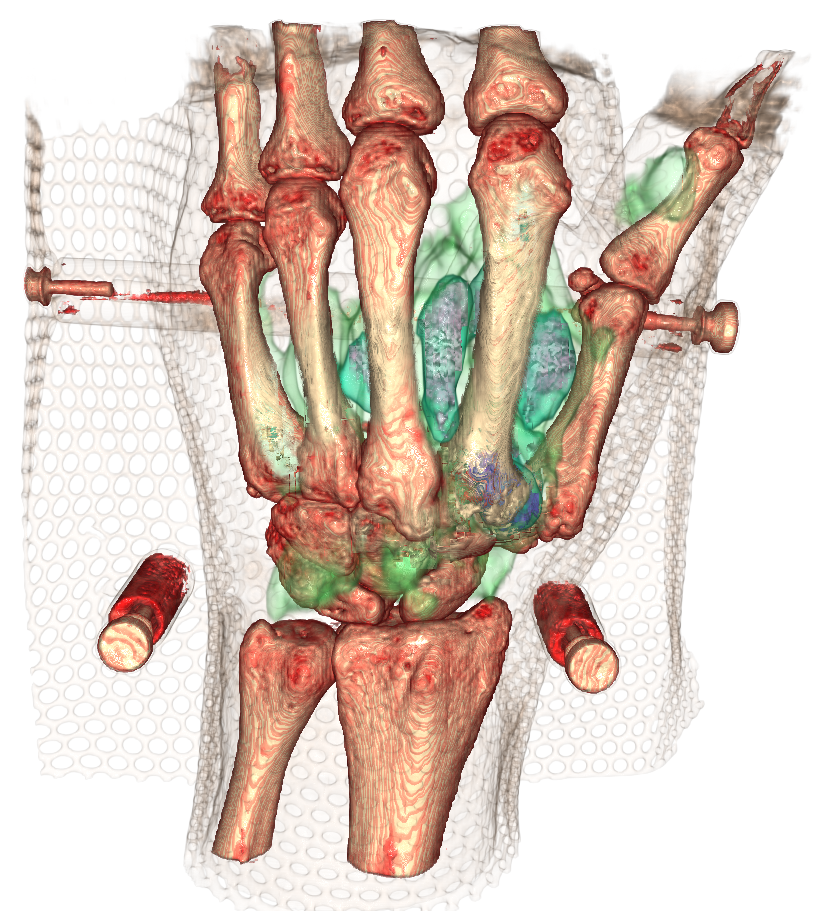
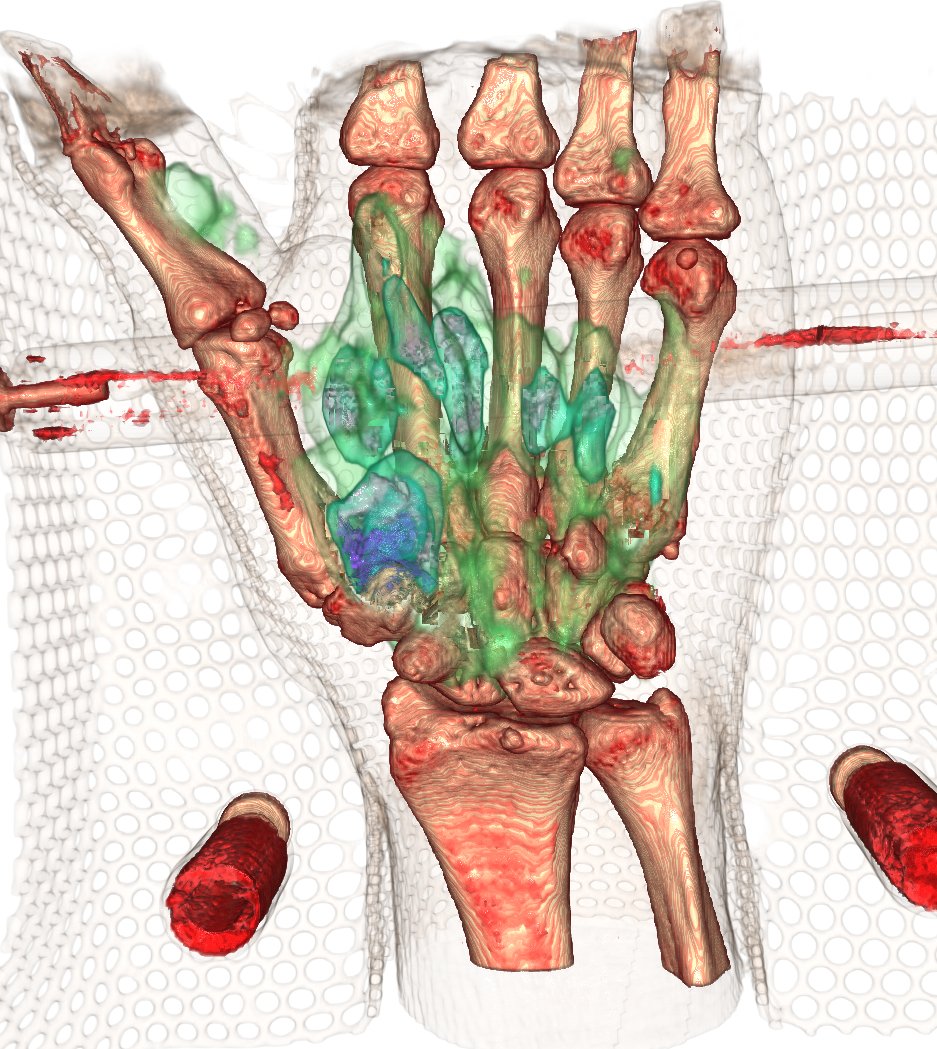
This page shows some results of visibility guided focus-context visualization of a wrist dataset. The main purpose here is to automate the whole process of visualization, thus simplifying users' work.
Video (bone)
|
|

| 1 iteration (back) | 1 iteration (front) |
|
|
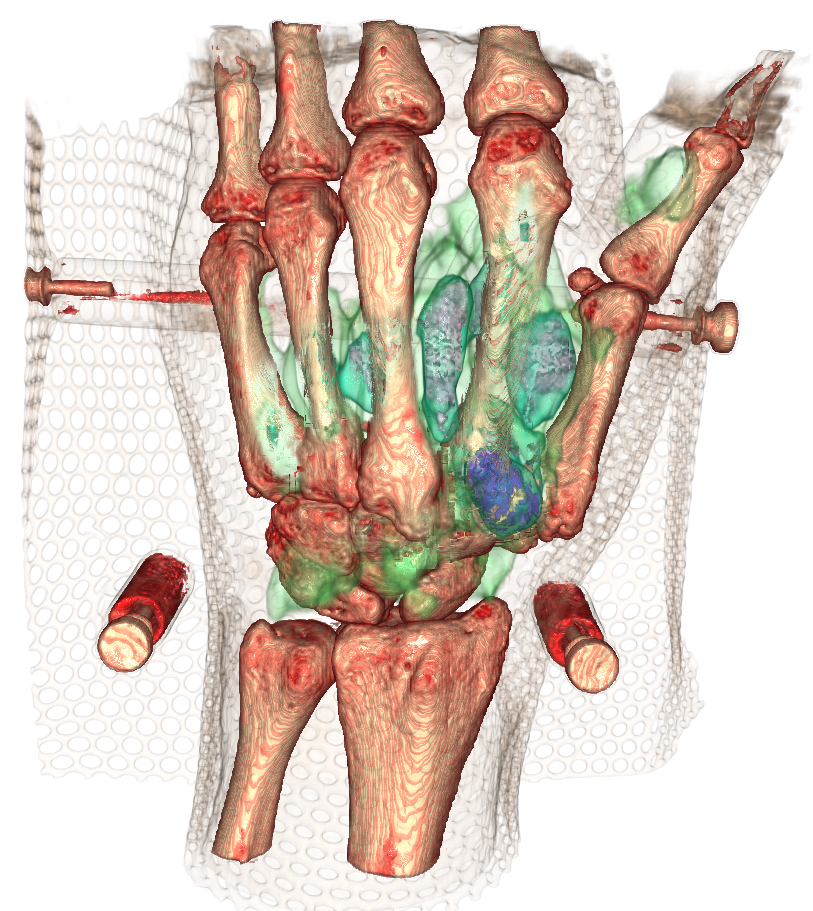
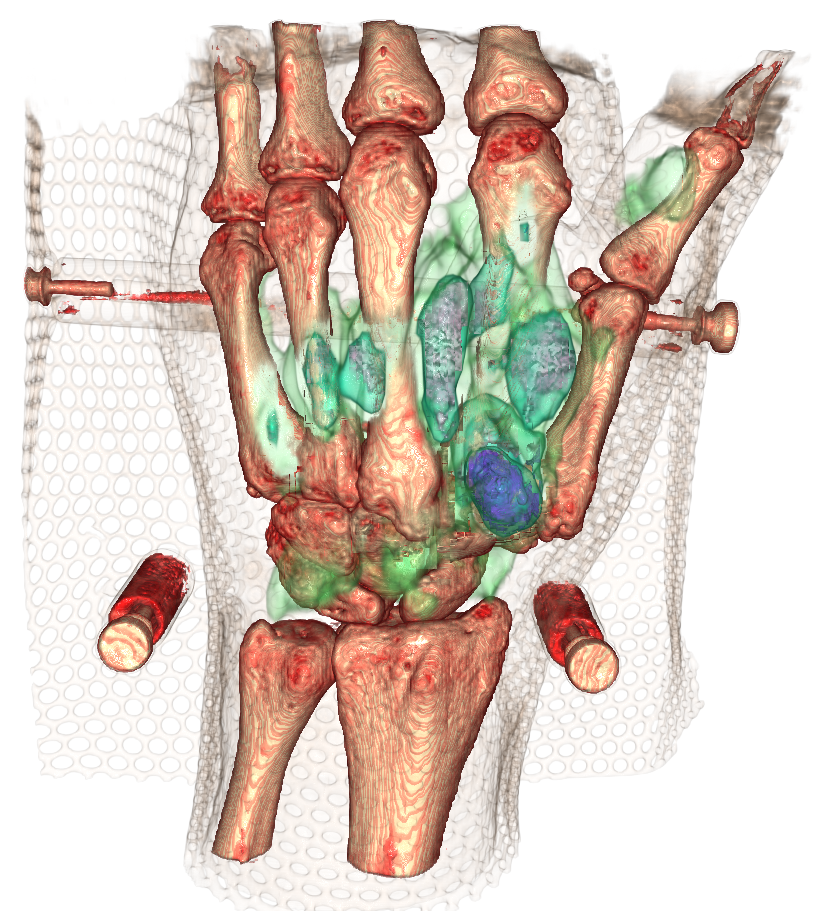
| 2 iterations | 3 iterations |
|
|
Video (old)
|
In the left animation, the region of interest is exposed after 3 iterations of visibility dependent opacity peeling. Some context information is reserved, for example, the contours of the phalanges. The phalanges here are semi-transparent, which is an automatically obtained effect helps to indicate depth information. However, to achieve such result in traditional methods, a special transfer function (TF) for region in front of the ROI is necessary, and users have to manipulate this TF in addition to a global TF for the whole wrist. (Other area is visualized through normal rendering) We are going to compare the automatically obtained result with the manually attained one. |
Comparison
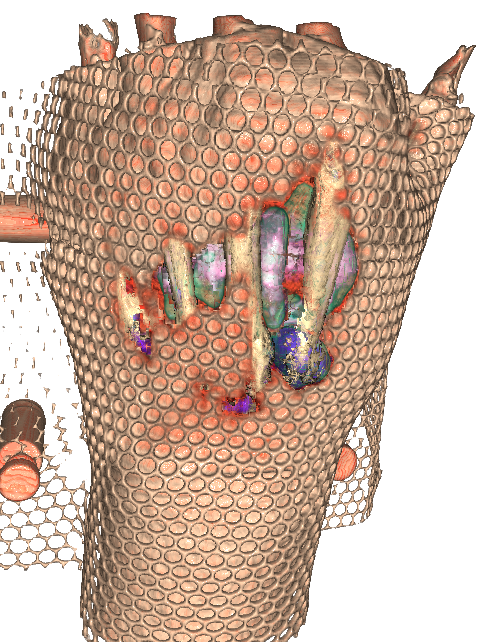
Figure #1:In the under picture, it shows the result with 2 iterations of visibility guided opacity peeling. We can see that the skin and the wrapping cloth are removed absolutely, but the surface of the phalanges is still visible. And a tumor (purple one) behind the bone is exposed, which is invisible in the right figure with two TFs. |
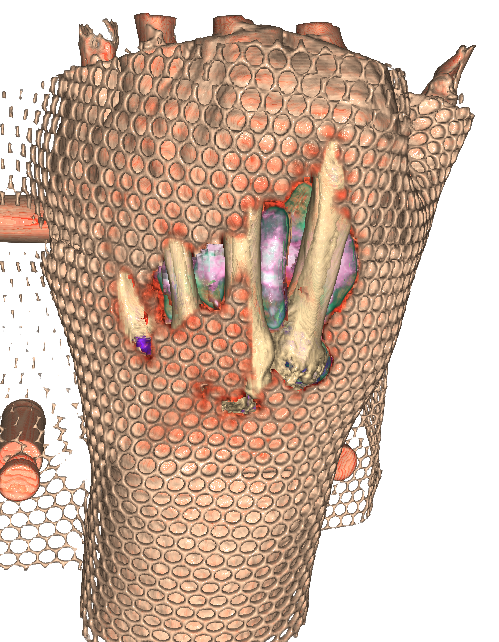
Figure #2:In the under picture, the dataset is rendered through a normal two TFs method. There is a global TF for the whole wrist CT dataset, and a local TF for the area in front of the ROI. Part of the tumors are occluded by the bone. |
|
|
Multi-pass
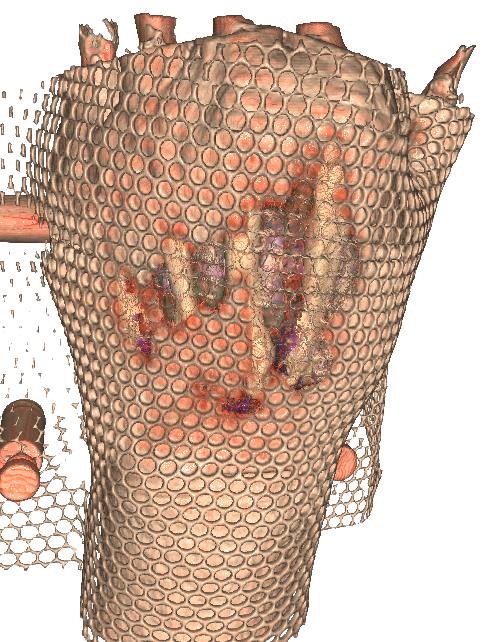
Figure #3:With one iteration of visibility guided opacity peeling, the details of the skin and wrapping cloth are reserved. We can still see the holes on the cloth, but the originally occluded phalanges are visible now. |
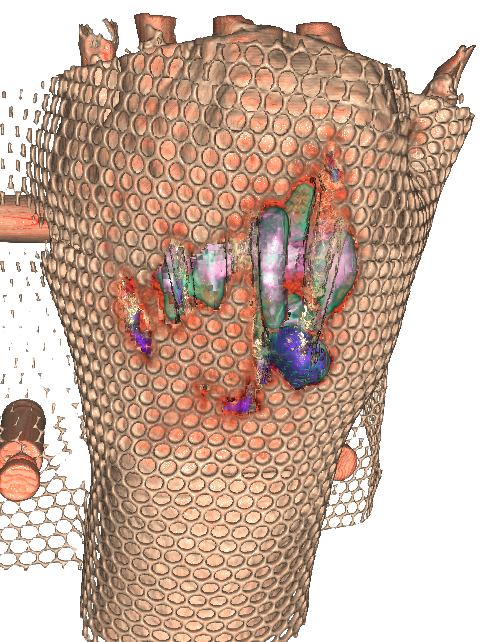
Figure #4:With three iterations of visibility guided opacity peeling, we can see everything in the ROI. But phalange contours here give us some subtle depth information. |
|
|
Main